











Why choose Lake Hills Montessori?
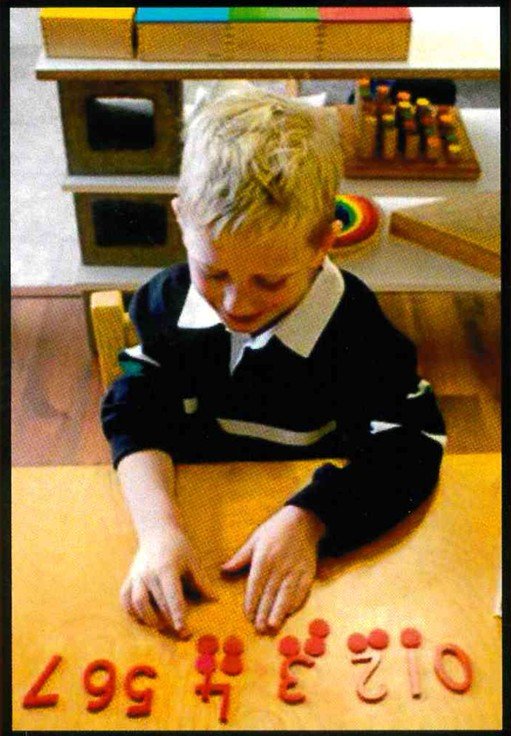
It’s not just individualized educational planning; it’s an educational philosophy. Generally, less is more. We consider our classrooms the “house of children,” and everything is designed to meet their needs. In this environment, they develop a love of learning that will serve them throughout their lives. They do become seekers of knowledge.
Independence
Teachers are called “Guides” because they follow the child’s lead and guide students through lessons that appeal to their unique, intrinsic motivations. We prepare the environment with appropriate educational materials for children, and then the guides teach lessons tailored to their preferences.
This independence allows children to learn, explore, and master subjects throughout their lives, not only as children but as lifelong learners.
Calm and Orderly
Children have a natural sense of order. In the Montessori classroom, everything has a place and a purpose - and Montessori students take great pride in knowing where things belong, how they are used, and how they are put away. Often, especially with parental encouragement, children bring aspects of this sense of order home with them.
This sense of order gives children a good start in managing their mental health and allows them to take on challenging tasks with more confidence and less stress.
Emotional Intelligence
We consider the whole child when guiding a student through their educational journey. This means helping children manage their emotions and understand the power of their own voice, spoken and eventually written. This, in turn, allows them to develop an internal sense of civility, strong social skills, and empathy.
Love of Learning: This will carry the children throughout their lives. The purposeful activities they engage in at school can be continued at home.
This emotional intelligence plays a vital role in the development of their emerging social intelligence.
Social Intelligence
Our Montessori classrooms are designed as miniature models of society, helping children learn responsibility and accountability. Through collective experiences, shared traditions, and community projects like gardening, children learn to be part of a functioning society where everyone is treated with grace, courtesy, kindness, and respect.
Developing a sense of social intelligence early in life can help children in both their social and academic lives by allowing them to cultivate healthy, effective study habits and by assisting them in becoming more comfortable by asking educators and peers for help.
Responsibility and Accountability: Children learn to take responsibility for their actions and environment.
Predictability and Consistency: Children’s daily schedules are consistent, as are their boundaries within the Montessori environment.
Learning = Play; learning is seamlessly integrated with play
Builds Self-Confidence: Self-satisfaction is the intended outcome of their purposeful “work”/play.
Strengthens the bond between adults and children: these relationships with both parents and teachers become collaborative in nature and mutually respectful.
Predictability and Consistency: Children’s daily schedules are consistent, as are their boundaries within the Montessori environment.
Mixed age groups: Every child can be the youngest, middle, or oldest within the 3-year (or 4-year) cycle. They must have the opportunity with each role. The youngest are observing and learning how to operate within this community, and the oldest are modeling and guiding appropriate behavior.
Preparation for real-world success: Everything we do is based on respect, courtesy, kindness, and grace.
Understanding the science behind the Montessori pedagogy is necessary to support our efforts at home. We consider the whole child with every decision we make.
❊ FAQs
You’ve got questions,
we’ve got answers
-
We will provide a morning snack. You will provide your child with their own lunch. If your child is a 5PM or 6PM pickup, we will provide afternoon snacks.
-
Drop off begins at 7:30 AM and ends at 8:30 AM. Please arrive within this window to ensure your child doesn't miss any playtime or work cycle activities.
-
Available pick-up times: 12PM, 3PM, and 5PM for Young Primary pickup, and 12PM, 3PM, and 6PM for Primary Pickup. If needed, you may collect your child early at any time during the day. If you are a 12 or 3pm pickup, please arrive early to avoid any late pick-up fees. If you are a 5pm or 6pm pick up, you are welcome to pickup your child anytime between 3:15pm to 5 or 6pm. Your tuition rate will depend on the pick up you select.
-
On your child's first day of school, please bring three sets of extra clothes for your child (shirt, pants, undergarments, and one pair of extra shoes). Every school day, please provide your child with a packed lunch and a full water bottle. We encourage each child to have a backpack of reasonable size; this helps ensure every child leaves with all their items and any work they may have completed that day.